

 July 9, 2007 –
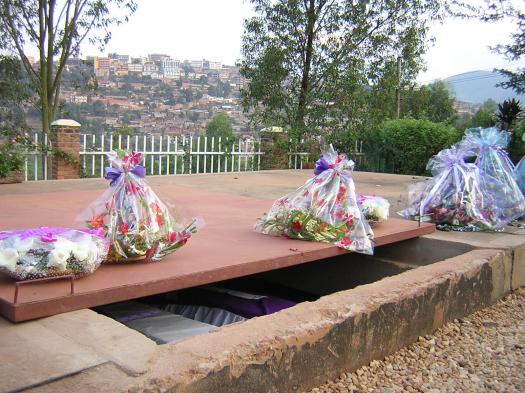
The genocide memorial in Kigali was something else. I’ve been to Canada’s War Museum and various Holocaust museums but nothing was as open and frank about a bad situation as the Kigali Genocide Memorial Centre. Among the displays there were pictures of dead bodies, videos of victims who survived with graphic scars on their bodies and bones, and a room full of the bones and skulls of the victims. The skulls showed how gruesome the killing was: some were missing huge chunks in the side, some were punctured with… I don’t know what. Bullets, pickaxes? Probably… or something much worse and unimaginable.
They referred to it as their story. “We did this” and “This happened to us.” It’s amazing how Rwandans recognize the genocide. It says in the travel guide, over 90% of the population were directly impacted by it. No one else did it. It was them. And it’s incredible they put it that way. They don’t blame the UN for not intervening. They don’t blame any country that denies what happened. It’s their story and and it’s amazing how important it is to Rwandans to share it and learn from it.
The children’s memorial blew me away. Here is a picture of a child. This is how old this child was. This is what he liked to eat and this was her favourite toy.
And this is how this child died.
Powerful. I think the plaque read “These were our future national heroes”
In 3 months, almost 1 million were killed.
“Rwanda was dead”
 andrewng.media